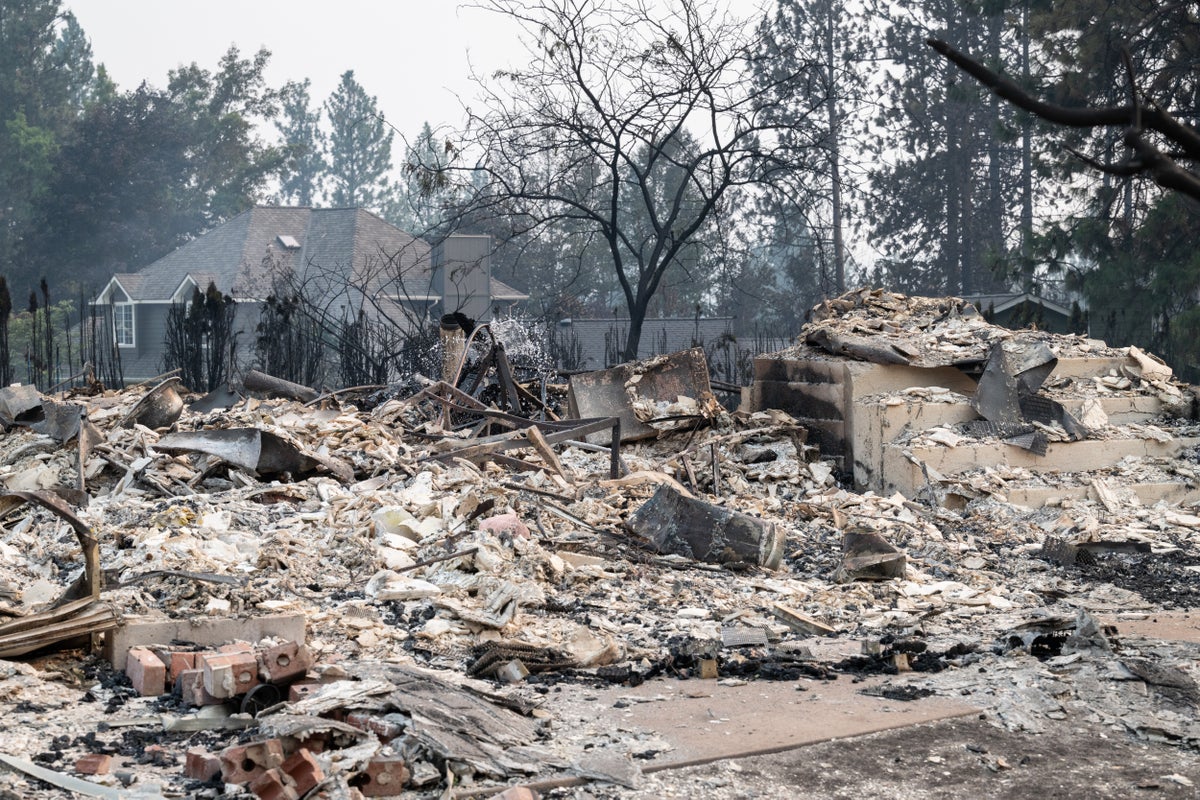
The smoke arrives long before the flames, carrying the distinct, unsettling scent of burning infrastructure. In communities stretching from the pine-studded hills of the Inland Northwest to the chaparral-choked canyons of Southern California, the boundary line between civilization and open timber has ceased to be a line at all. It is now a friction point. When disaster strikes regions like Spokane, the destruction is rarely an act of unmitigated nature. Instead, it is the predictable collision of aggressive suburban expansion and historical fire suppression policies, creating a modern emergency that emergency responders are struggling to contain.
Understanding why these disasters happen requires looking past the immediate wall of fire and examining the blueprint of modern migration. Millions of Americans have traded congested urban centers for the perceived tranquility of rural fringes, pushing housing developments deeper into timberlands. Real estate markets reward this expansion, yet municipal planning rarely accounts for the ecological reality of the land.
The Mechanics of the Wildland-Urban Interface
The wildland-urban interface, known to emergency planners as the WUI, is where human development meets undeveloped wildlands. This zone is ground zero for contemporary property loss. For decades, land management agencies treated wildfire as an enemy to be eradicated immediately. Every spark was stamped out. While this protected timber stocks in the short term, it fundamentally altered forest ecology.
Without regular, low-intensity burns to clear out underbrush, forests transformed into overgrown tinderboxes. When a blaze finally ignites during a dry summer, the accumulated fuel load creates extreme fire behavior that standard firefighting tactics cannot defeat.
Homes built within these zones add a completely different type of fuel to the equation. Traditional building materials, vinyl siding, and wood-shake roofs act as kindling when exposed to wind-driven embers. These embers can travel miles ahead of the main front, igniting neighborhoods from the roof down long before the wall of fire ever arrives.
Zoning Laws and Economic Realities
Local governments face immense financial pressure to approve new housing developments. Property taxes fund essential municipal services, and empty land generates very little revenue. Consequently, county commissioners often greenlight subdivisions in high-risk zones without mandating adequate evacuation routes or retrofitting requirements.
Insurance markets are finally beginning to react, though the adjustment is brutal. Carriers are pulling out of high-risk states or multiplying premiums overnight, leaving homeowners in a financial vise. Yet, stopping construction altogether is politically impossible.
The economic machinery driving suburban expansion cares little for ecological history. Developers build houses, buyers purchase them for the view, and taxpayers eventually subsidize the multi-million dollar firefighting operations required to save them. This cycle repeats every single fire season.
Shifting From Suppression to Adaptation
Fighting every fire with maximum force is no longer viable. Foresters and ecologists agree that mechanical thinning and prescribed burns are necessary to reduce fuel loads, yet these efforts face intense bureaucratic hurdles and public pushback over smoke and air quality.
Communities that survive future disasters will be those that fundamentally change how they build. Metal roofing, double-paned tempered glass, cleared defensible space, and ember-resistant vents are not luxuries. They are basic survival requirements for anyone choosing to live near a forest.
The fire season no longer has an end date. It has morphed into a year-round reality that demands a total overhaul of zoning, construction standards, and personal responsibility. The landscape will continue to burn, and the choice of whether to stand in its path unprotected belongs entirely to us.