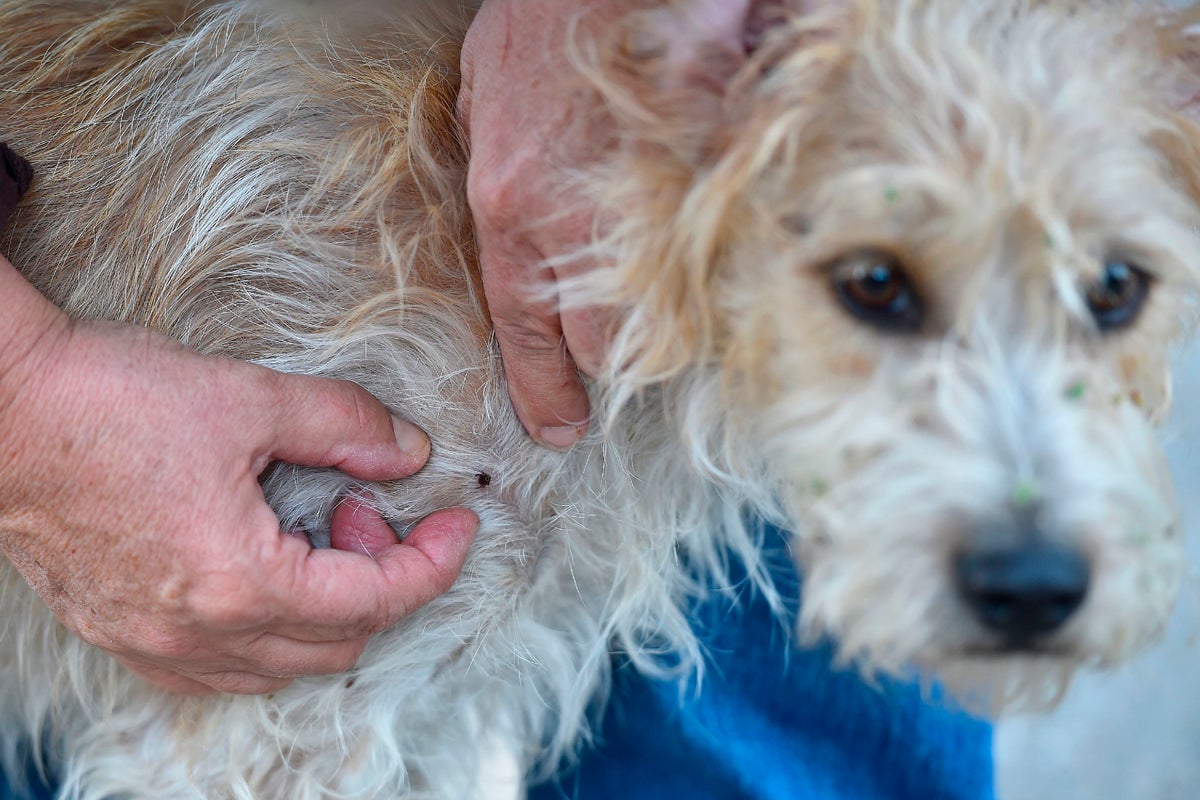
Emergency room visits for tick bites have escalated to their highest early-season levels in nearly a decade, signal-flashing a quiet ecological crisis. Federal data confirmed that weekly hospital admissions for tick attachments spiked well above historic norms across almost every geographic territory. This is not a random statistical anomaly or a simple byproduct of more people tracking their hikes.
The primary catalyst for this surge is a compounding mix of historically mild winters, fragmented suburban forestry, and shifts in wildlife host populations that have essentially optimized conditions for arachnid survival. As a result, the traditional spring timeline for vector-borne threats has collapsed into a year-round reality, exposing a broader segment of the population to pathogens like Lyme disease, Anaplasmosis, and the red-meat allergy known as alpha-gal syndrome.
Understanding this trajectory requires moving past the superficial panic of a bad bug season. The real story lies in how human development and a changing climate have inadvertently engineered a paradise for blood-feeders.
The Mechanized Perfection of the Modern Suburban Vector
To understand why tick populations are exploding, look no further than the modern exurban landscape. Decades of conservation efforts and suburban planning have created a highly specific environment: islands of secondary-growth forest intersected by manicured lawns and paved cul-de-sacs.
This environment is structurally flawed. It lacks the biodiversity required to keep parasitic populations in check, while maximizing the specific edge habitats where ticks thrive.
The Myth of the Forest Primeval
Deep, old-growth forests are remarkably resilient ecosystems. They host a complex web of predators and competitors that limit the unchecked growth of any single species.
Suburban fragmentation destroys this balance. When a forest is carved up for housing developments, large apex predators flee. What remains is a paradise for generalist species.
- The White-Footed Mouse: This small rodent is the primary reservoir for Borrelia burgdorferi, the bacterium that causes Lyme disease. In broken, fragmented woods, mouse populations swell because their natural predators—like foxes, owls, and hawks—require larger, uninterrupted territories to hunt effectively.
- The White-Tailed Deer: While mice breed the bacteria, deer are the primary reproductive hosts that feed adult female ticks, allowing them to drop thousands of eggs into the leaf litter. Suburbs offer deer an endless buffet of ornamental gardens, zero hunting pressure, and no natural predators.
The Lifecycle Acceleration
Ticks operate on a strict energy budget determined by temperature and ambient moisture. In the past, sustained freezing temperatures over the winter served as a natural cull, killing off a significant portion of the population and forcing survivors into a dormant state beneath the snowpack.
That winter firewall has broken down. Mild winters allow nymphal and adult ticks to remain active during months when they previously would have been immobilized.
Data collected by vector control districts reveals that deer ticks are now actively questing—climbing to the tips of long grass and waiting for a host to pass by—the moment ground temperatures nudge above freezing. This effectively tacks several weeks onto both ends of the traditional biting season.
+-------------------------------------------------------------+
|               THE INADVERTENT BREEDING GROUND               |
+-------------------------------------------------------------+
| Suburban Fragmentation -> Loss of Apex Competitors          |
|                               |                             |
|                               v                             |
| Overpopulated Rodent & Deer Reservoirs                      |
|                               |                             |
|                               v                             |
| Milder Winter Conditions -> Extended Questing Windows       |
|                               |                             |
|                               v                             |
| RESULT: Exponential Surge in Human Pathogen Transmission    |
+-------------------------------------------------------------+
Beyond Lyme Disease The New Pathogen Portfolio
For decades, the public health conversation surrounding tick bites focused almost exclusively on Lyme disease. That narrow focus is dangerously obsolete. A single bite can now introduce a complex cocktail of pathogens, some of which manifest with terrifying speed.
Anaplasmosis and Babesiosis are riding the coattails of the blacklegged tick expansion. Babesiosis, a microscopic parasite that infects red blood cells, can cause hemolytic anemia and is particularly dangerous for elderly or immunocompromised individuals. Unlike Lyme, which often presents with a distinct, easily recognizable bullseye rash, these secondary infections frequently mimic a severe, non-specific flu, leading to frequent diagnostic delays in emergency rooms.
Then there is the rise of the Lone Star tick, a aggressive species historically confined to the American South that has pushed aggressively into the Midwest and Northeast. This vector carries a unique carbohydrate molecule called alpha-gal.
When a Lone Star tick bites a human, it can sensitize the host's immune system to this molecule, triggering a severe, life-threatening allergy to red meat and dairy products. It is an incurable condition that fundamentally alters a person's life, born from a single walk through the brush.
The viral threats are even more acute. The Powassan virus, though still statistically rare, is transmitted by the same blacklegged ticks responsible for Lyme.
While Lyme bacteria typically require an infected tick to remain attached for 24 to 48 hours to transmit, Powassan virus can be passed to the host in a matter of minutes. The virus attacks the central nervous system, causing encephalitis or meningitis in severe cases, with a significant mortality rate and long-term neurological consequences for survivors.
The Flaws in Contemporary Mitigation
As the threat surface expands, the tools used by the public to protect themselves remain stubbornly archaic. The standard advice—wear long pants, tuck socks, and apply chemical repellents—fails to account for human behavior and the sheer density of modern tick populations.
Permethrin-treated clothing remains the gold standard for personal protection, yet its adoption among the general public is minimal. Most consumers rely on topical sprays that are easily washed off by sweat or applied unevenly, leaving vulnerabilities that ticks are evolutionarily programmed to exploit.
On a macro level, community-wide mitigation strategies are trapped in a regulatory and logistical logjam. Large-scale deer culls are politically toxic in suburban communities, where residents often view the animals as gentle neighborhood fixtures rather than dangerous vector vessels.
Acaricide spraying—the widespread application of tick-killing pesticides—presents distinct environmental hazards, frequently threatening non-target insect populations, including essential pollinators.
Some municipalities are experimenting with targeted intervention methods, such as bait boxes that apply a small dose of pesticide to mice as they enter to forage, effectively killing the ticks without harming the rodent or the wider ecosystem. These programs are highly effective, but they are expensive, labor-intensive, and require consistent funding that many local health departments simply do not possess.
The reality of the situation is stark. The ecological shifts that created this surge took decades to manifest, and they will not be reversed by a single season of heavy pesticide application or public awareness campaigns. The baseline has shifted. Spending time outdoors now requires a permanent calculation of risk, a systematic routine of self-examination, and an acknowledgment that the wilderness in the backyard has grown considerably more hostile.