The declaration of a three-day national mourning period in Iran following a high-profile state loss is not merely a cultural ritual; it is a calculated instrument of statecraft designed to manage systemic shock, consolidate internal power, and signal deterrence to external adversaries. When a regime faces the sudden deletion of core leadership components, the primary vulnerability is not logistical continuity, but rather the psychological and political vacuum that threatens regime stability. By engineering a structured, nationwide grieving process across major urban centers, the state transforms a moments-of-crisis vulnerability into a centralized mechanism for mass mobilization.
Understanding this phenomenon requires breaking down the strategic architecture of state-managed grief into its functional components: psychological containment, structural mobilization, and geopolitical signaling.
The Tri-Centric Architecture of State Mourning
State-managed mourning operates on three distinct functional layers, each targeting a specific audience and vulnerability within the geopolitical framework.
1. Internal Psychological Containment
The immediate aftermath of a leadership vacuum creates a high-entropy environment. Rumors, panic, and opportunistic dissent thrive in information voids. The declaration of national mourning imposes an official, highly structured narrative that fills this void immediately.
- Temporal Control: Suspending normal bureaucratic and economic operations for a fixed duration (three days) pauses standard societal friction, forcing the population to engage with the state’s grief narrative.
- Emotional Standardizing: By defining the loss as a collective national tragedy, the state delegitimizes counter-narratives or celebrations by internal dissidents, framing dissent as an act of treason against the collective memory.
2. Structural Mobilization and Spatial Control
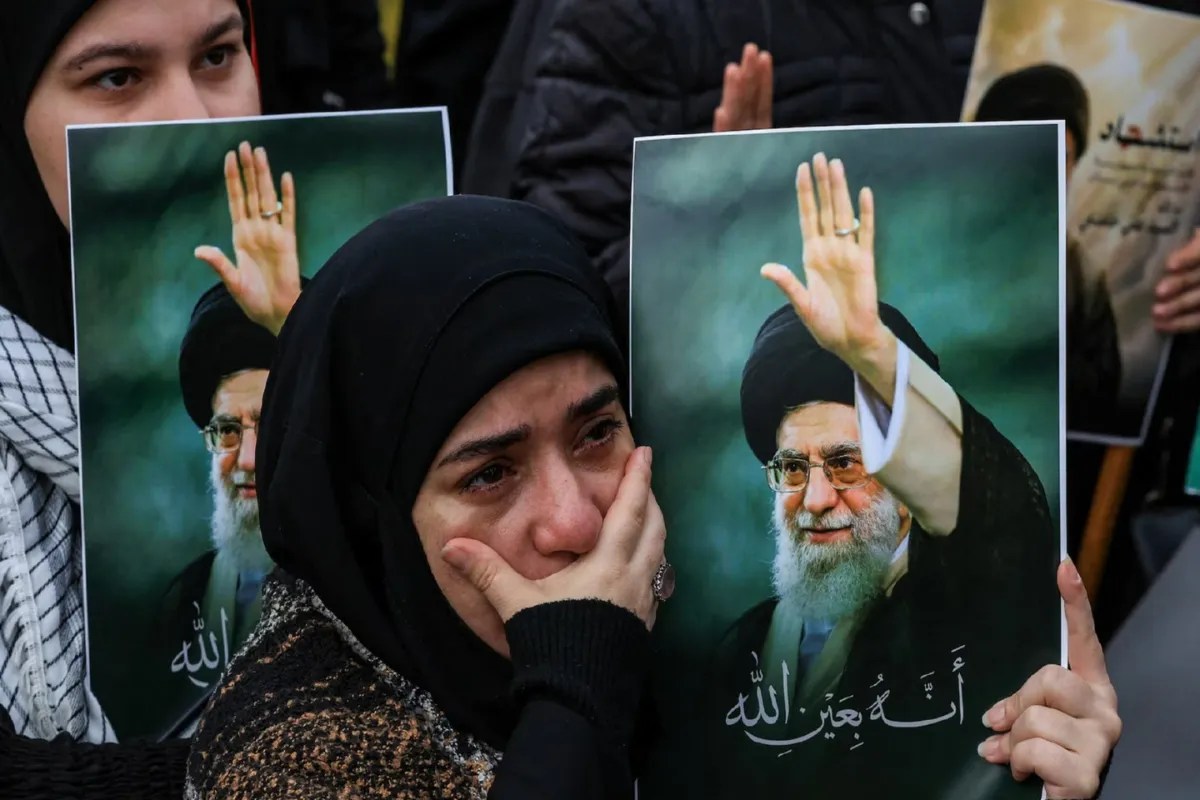
The physical manifestation of mourning occurs through coordinated processions across key urban nodes, typically spanning major political and religious centers like Tehran, Mashhad, Qom, and Tabriz. This spatial distribution serves a operational purpose.
- Logistical Redundancy: By routing processions through multiple cities, the state ensures that the mobilization effect is not localized to the capital. It forces regional administrative apparatuses to demonstrate loyalty and logistical capability.
- Mass Visibility: High-density public gatherings serve as visual proof of the regime's enduring social base. The imagery generated during these processions is weaponized domestically to demoralize unorganized opposition networks by projecting an illusion of monolithic public support.
3. External Geopolitical Signaling
To foreign intelligence apparatuses and adversarial states, a sudden leadership transition can signal a window of operational vulnerability. The state uses the mourning period to project continuity and defiance.
- Deterrence Through Solidarity: The massive scale of public gatherings signals to external actors that any attempt to exploit the transition will face a highly mobilized, ideologically aligned population.
- Diplomatic Consolidation: The funeral proceedings act as a venue for high-level, face-to-face alignment with regional proxies and foreign allies, solidifying security architectures under the guise of diplomatic condolence.
The Cost-Function of Mass Mobilization
Executing a multi-city, multi-day mourning apparatus incurs significant structural costs and introduces operational friction that the state must balance against the political utility of the event.
Total Operational Cost = Economic Shutdown Cost + Security Logistical Load + Public Friction Coefficient
The economic shutdown cost is the most immediate variable. Halting commercial activity, closing financial institutions, and disrupting supply chains creates a measurable contraction in gross domestic product (GDP) output over the three-day window. For an economy already operating under stringent international sanctions, this deliberate halt represents a significant sacrifice of capital liquidity.
The security logistical load demands the simultaneous deployment of internal security forces, paramilitary units (such as the Basij), and conventional law enforcement. These forces must secure vast geographical corridors, manage crowd control to prevent stampedes—a recurring vulnerability in high-density regional gatherings—and monitor for opportunistic insurgent or terrorist strikes. The concentration of security assets in procession zones inherently thins the state's security posture on the periphery, creating localized vulnerabilities.
The third variable, the public friction coefficient, represents the risk of forcing compliance on a population segment that is economically precarious or politically alienated. If the state extends the duration of forced mourning beyond the psychological threshold of the neutral populace, the mandated pause in economic life can inadvertently trigger economic frustration, shifting the public mood from passive compliance to active resentment.
Urban Geography as a Security Variable
The selection of cities for national mourning processions follows a precise geopolitical and religious logic rather than mere administrative convenience.
| City | Primary Strategic Function | Target Demographic |
|---|---|---|
| Tehran | Political Legitimization & Bureaucratic Consolidation | Bureaucratic elite, international media, domestic middle class |
| Tabriz | Regional Integration & Ethnic Alignment | Northwestern populations, Azerbaijani-speaking segments |
| Qom | Ideological Calibration & Clerical Endorsement | Theocratic establishment, seminary networks, ultra-conservative base |
| Mashhad | Spiritual Anchoring & Mass Pilgrimage Mobilization | Eastern population, working-class religious conservatives |
Tabriz often serves as the initial flashpoint for regional consolidation, anchoring the northwestern frontier and demonstrating ethnic-regional alignment with the central authority. The procession then migrates to Tehran, the bureaucratic and media nexus of the state. Here, the focus is on international projection and institutional continuity, demonstrating that the apparatus of state remains operational despite the loss.
The subsequent movement to Qom re-anchors the leadership's legitimacy within the ideological and clerical foundation of the state, securing the endorsement of the senior theological establishment. Finally, the sequence frequently culminates or features prominently in Mashhad, leveraging the massive infrastructure of the Imam Reza Holy Shrine to handle peak crowd density and provide a highly potent spiritual conclusion to the state narrative.
Structural Fault Lines in the Grief Strategy
While highly effective in the short term, this strategy possesses inherent vulnerabilities that can cause the apparatus to fail if mismanaged.
The first limitation is narrative inflation. When a state repeatedly uses hyperbole and mandatory national mourning for various cadres of leadership, the psychological impact experiences diminishing marginal returns. The general population develops emotional fatigue, and the visual impact of the processions loses its potency both domestically and internationally.
The second limitation is the risk of operational infiltration. Gathering the entirety of the state’s political, military, and diplomatic elite in highly publicized, geographically fixed locations creates a dense target environment. The security apparatus must execute flawless counter-intelligence and physical screening protocols under compressed timelines, exposing the regime to catastrophic decapitation risks if an adversary possesses advanced localized assets.
This creates an operational bottleneck where the state must choose between maximizing public density for media projection or maximizing physical security by restricting access to the core leadership cadre attending the events.
Strategic Realignment Protocols
The final phase of the national mourning period marks the transition from symbolic grief to concrete policy adjustments. As the three-day window closes, the state apparatus pivots immediately to fill institutional vacancies. The momentum generated by mass mobilization is converted into political capital to ratify successor appointments, pass emergency security measures, or launch retaliatory kinetic operations if the loss was the result of external asymmetric action.
The immediate operational priority for regional analysts is monitoring the specific rhetoric deployed during the final day of processions in Tehran and Mashhad. The precise wording used by the supreme authority to eulogize the deceased serves as the baseline blueprint for the state's next foreign policy cycle. If the rhetoric emphasizes martyrdom and resistance, it signals an immediate escalation in proxy financing and asymmetric deployment along external frontiers. Conversely, an emphasis on stability, institutional permanence, and internal cohesion signals a period of consolidation, during which the state will prioritize domestic security enforcement and economic stabilization over external adventurism.
The success of the transition depends on how rapidly the regime can dismantle the temporary mourning infrastructure and restore normal economic and security baselines without allowing the psychological vacuum to re-emerge. The transition from public grief to institutional normalcy must be absolute, swift, and highly visible.