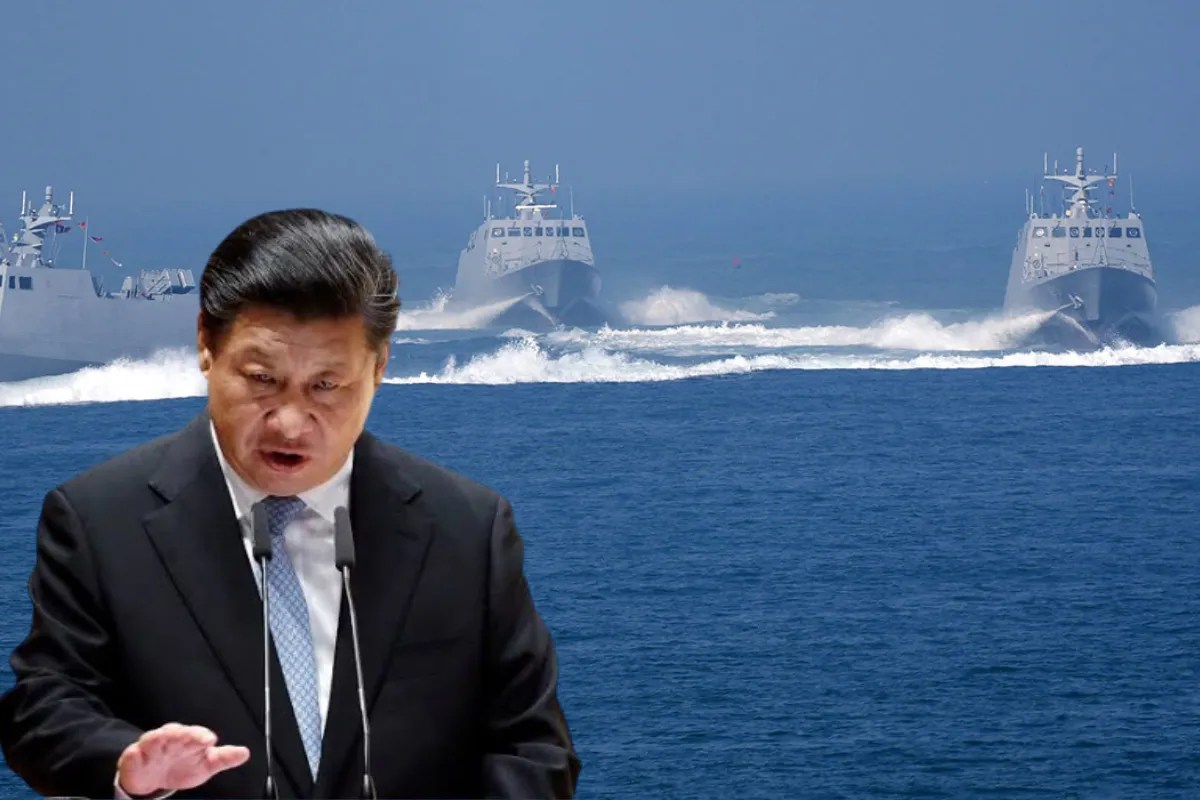
The return of Russia's 28,000-tonne nuclear-powered battlecruiser Admiral Nakhimov to the Northern Fleet's operational area marks a structural shift in Arctic anti-access/area-denial (A2/AD) architecture. Mainstream coverage frames this reactivation primarily through the lens of Cold War nostalgia or raw displacement. That analysis misses the core operational objective. Recommissioning a surface combatant of this scale is not a nostalgia project; it is an exercise in doctrine-level payload concentration designed to neutralize NATO Carrier Strike Groups (CSGs) at stand-off ranges.
By modernizing a late-Soviet hull with modular vertical launch systems (VLS) capable of firing hypersonic ordnance, Moscow solves a specific operational bottleneck: how to project high-density, multi-domain sea-denial fires from a single platform without deploying an entire carrier strike package.
The Doctrine of Concentrated Stand-off Firepower
To understand the strategic utility of the modernized Kirov-class platform, one must examine the evolution of Russian anti-surface warfare (ASuW). Soviet-era operational doctrine relied on saturation attacks using heavy, long-range anti-ship cruise missiles (ASCMs) like the P-700 Granit. The goal was simple: overwhelm a carrier group's Aegis Combat System by firing dozens of high-mass, supersonic vectors simultaneously from multiple platforms—submarines, surface ships, and strategic bombers.
The modernized iteration of this platform alters the payload dynamics completely.
Payload Modularization and VLS Integration
The removal of the angled, fixed-launch P-700 tubes in favor of modern UKSK (Universal Vertical Launching System) cells transforms the hull's operational utility.
- Cell Density: The structural volume previously occupied by 20 heavy P-700 launchers now accommodates up to 80 modern VLS cells dedicated solely to strike and anti-surface roles, alongside expanded air defense VLS arrays (such as adapted S-300FM / S-400 derivatives).
- Vector Flexibility: The UKSK architecture allows a dynamic mix of ordnance based on mission profile:
- 3M54 Kalibr: Subsonic/supersonic cruise missiles designed for land-attack and long-range anti-ship strikes.
- 3M55 Oniks: Supersonic ramjet ASCMs targeting medium-to-long-range naval targets using active/passive radar homing.
- 3M22 Zircon: Scramjet-powered hypersonic cruise missiles operating at speeds exceeding Mach 6-8, designed to compress defensive response windows.
Traditional P-700 Array [20 Fixed Launchers]
   ---> High Structural Weight / Single Missile Type

Modernized UKSK Architecture [80+ Universal Cells]
   ---> Modular Payload (3M54 Kalibr + 3M55 Oniks + 3M22 Zircon)
The key mechanical advance is not just velocity; it is the reduction of the targeting loop (the sensor-to-shooter cycle). A hypersonic flight profile reduces the targeted vessel's reaction time from tens of minutes to under three minutes at tactical ranges, severely testing the automated decision-making capacity of modern integrated air defense systems.
The Arctic Operational Node: Strategic Geography
Stationing a platform of this payload density at Sevmorput or Severomorsk directly impacts the security environment of the GIUK Gap (Greenland, Iceland, United Kingdom). The Northern Fleet’s primary task is protecting the sea-based leg of Russia’s nuclear triad—specifically the Borei-class SSBNs operating in the Arctic "bastion."
The operational math dictates two key roles for the modern battlecruiser in this theater:
Bastion Defense Optimization
The vessel serves as a mobile sea-going command hub and air-defense shield. Equipped with naval variants of long-range surface-to-air missile systems, a single hull can establish a localized radar and missile envelope spanning hundreds of kilometers. This frees up smaller frigates (Admiral Gorshkov-class) and attack submarines (Yasen-class) to execute offensive tracking missions deeper in the North Atlantic.
Compression of NATO Response Timelines
By positioning hypersonic-capable combatants north of the Arctic Circle, naval operational zones in the Norwegian Sea are brought within high-velocity strike range. A NATO carrier task force entering these waters no longer operates in a medium-threat environment; it must maintain constant peak readiness against low-observable, high-mach trajectories.
Structural Bottlenecks and Vulnerability Analysis
Despite the formidable firepower metrics, deploying a single 28,000-tonne surface combatant introduces explicit operational trade-offs and structural vulnerabilities.
The Single-Point Failure Dynamic
Concentrating up to 80 anti-surface vectors and hundreds of surface-to-air missiles on a single hull creates an asymmetrical target for enemy forces. Modern submarine-launched heavy torpedoes (e.g., Mk 48 or Spearfish) target the acoustics and hull structural integrity below the armor belt. A single successful hit beneath the keel can disable or sink the vessel regardless of its displacement or deck-level defenses.
Thermal and Acoustic Signatures
Nuclear propulsion provides virtually unlimited endurance, eliminating fuel logistics constraints for the propulsion plant. However, it does not eliminate acoustic transmission through the hull from gearboxes, cooling pumps, and auxiliary systems. Furthermore, a surface ship of this mass presents a massive Radar Cross Section (RCS) and thermal profile, making persistent tracking by orbital Synthetic Aperture Radar (SAR) constellations and maritime patrol aircraft straightforward in open water.
Industrial Logistics and Sustainment Costs
The capital expenditure required to refit a Cold War-era nuclear hull is disproportionate compared to building smaller, modern surface units. The shipyard capacity, drydock availability, and specialized labor dedicated to maintaining a single Kirov-class vessel divert critical resources away from serial production of lighter, highly capable frigates and corvettes.
Tactical Framework: Layered Engagement Sequences
In an operational scenario involving a modern carrier strike group, the modernized battlecruiser relies on a layered, multi-tier engagement profile rather than a solo duel.
- Reconnaissance-Strike Complex Integration: Satellite tracking (e.g., Liana constellation), coastal radar installations, and long-range maritime reconnaissance aircraft identify the carrier group's location, feeding telemetry to the vessel's battle management system.
- Staggered Vector Launch:
- Phase 1: Subsonic Kalibr missiles are launched to draw out defensive interceptors and saturate Aegis radars.
- Phase 2: Supersonic Oniks missiles engage at low altitudes using sea-skimming profiles.
- Phase 3: Hypersonic Zircon missiles are launched into high-altitude cruise profiles before diving at terminal velocity onto high-value targets (carriers, amphibious assault ships).
- Local Defense Shield: While executing offensive salvos, the battlecruiser relies on its layered SAM systems (Poliment-Redut / S-300FM) and point-defense CIWS (Close-In Weapon Systems) to intercept incoming counter-strikes.
Strategic Play: Implications for Northern Flank Naval Power
Naval planners assessing the reactivation of the Admiral Nakhimov must avoid two analytical errors: overestimating the ship as an invincible super-weapon, or dismissing it as an obsolete target.
The correct framing treats this vessel as a mobile missile bastion—an asymmetric counter-weight to Western carrier superiority in restricted geographic theaters. Its presence forces opposing navies to reallocate high-value anti-submarine and air-defense assets to monitor a single surface entity, altering the force-allocation calculus across the entire North Atlantic and Arctic theaters.
To counter this force-concentration model, naval forces must prioritize multi-domain anti-submarine warfare (ASW) blockades before such platforms clear local choke points, paired with distributed orbital tracking to maintain real-time targeting solutions long before the vessel reaches its operational launch boundaries.