The earth does not scream when it breaks. It whispers first.
A dry crackle of shifting shale. A sudden, unexplained stillness in the canopy where birds suddenly refuse to sing. Then, the weight of a thousand ancient hillsides unmoors, sliding downward with the cold, hungry indifference of an avalanche. For a deeper dive into this area, we suggest: this related article.
If you have never stood at the foot of the Himalayas during the monsoon, you might think of a landslide as an event. A news ticker flashing across a screen. A statistic tucked neatly into a morning dispatch from Beijing or Kathmandu.
Fourteen dead. Roads severed. Villages cut off from the pulse of the world. For additional information on this development, comprehensive coverage can also be found on TIME.
Numbers are kind to us. They let us look away.
But out there, on the jagged edges of Nepal where the earth is still rising, a landslide is not an event. It is a slow-motion unraveling. It is the realization that the ground beneath your kitchen floor is nothing more than a temporary arrangement.
The Weight of Water
Let us be honest about what happens when the sky opens.
Water is heavy. We forget this because it flows from our taps in neat, obedient streams. We drink it, we wash with it, we watch it bead on our windows on quiet Sunday mornings. But catch a hundred trillion gallons of it, dump it onto steep, deforested Himalayan slopes stripped bare by decades of frantic timber trade and shifting roads, and water becomes a battering ram.
Consider what happens next: the soil drinks until it bloats. The clay loses its grip on the bedrock. Deep underground, invisible to the eye of any satellite or government minister watching from a capital miles away, the friction fails.
When Beijing issued its sudden, sharp warning regarding the cascading threat of landslides in the wake of Nepal’s latest disaster, it wasn't just a routine diplomatic bulletin. It was a recognition of a shared nightmare. Mountains do not respect international borders. The same tectonic spine that supports Tibet bleeds into the valleys of Nepal. When the earth slips in one basin, the hydrological shockwaves echo everywhere.
Imagine a hypothetical farmer named Ramesh, waking up to the smell of wet mud and crushed pine needles before dawn in a remote valley north of Kathmandu. Ramesh does not care about geopolitical warnings. He cares about the stone wall he built with his father thirty years ago—the wall that now hangs suspended over a fifty-foot drop where his terraced maize field used to be.
His world has shrunk to the width of a muddy footpath and the sound of helicopters chopping faintly through the low-hanging cloud cover miles down the gorge.
The Invisible Stakes
Why do we keep building in the path of the falling stone?
It is easy to blame human folly. We shake our heads at the news reports, whispering about zoning laws and climate volatility. Yet, poverty has a way of backing people into corners, or in this case, onto steep, vertical inclines where no one else wants to live. Flat land is expensive. Flat land belongs to the wealthy, the powerful, the hotels, the state. The vertical world is left to those who have nowhere else to go.
And so they build. They cut into the toes of ancient slopes to carve out narrow ribbons of asphalt. They plant crops on inclines that should belong exclusively to wild goats and deep-rooted pines. Every shovel of earth moved for a new road is a quiet invitation to gravity.
When the disaster strikes, the immediate response is a flurry of rescue tents, emergency rations dropped from military transports, and solemn politicians offering condolences. But the real crisis begins three weeks later.
The cameras leave. The ink dries on the disaster reports.
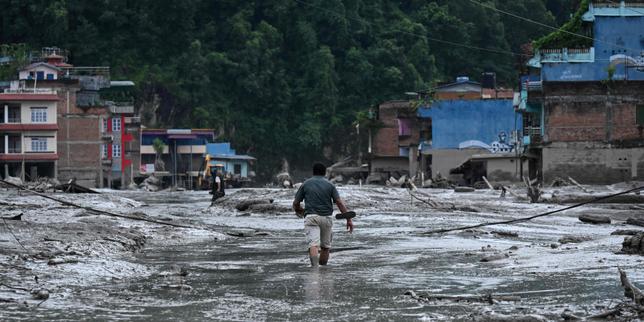
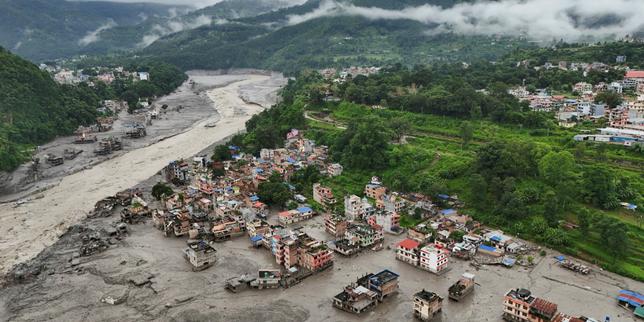
What remains is a landscape turned inside out. Rivers choked with millions of tons of fresh silt threaten downstream valleys with sudden, catastrophic flooding long after the rain has stopped. Roads that took decades to finance are snapped like dry twigs, isolating mountain communities from medical care, schools, and markets. A pregnant woman in labor cannot cross a newly formed canyon of mud. A child with a high fever cannot reach a clinic.
This is the hidden cost of ecological neglect. It is not just the sudden violence of the fall; it is the long, grinding isolation that follows.
Reading the Scars
We are living through an era where the earth is losing its patience.
Geologists and meteorologists talk endlessly about tipping points and saturation indices. They use complicated models to predict where the next slope will fail. Yet, looking at a computer screen glowing in an air-conditioned office in Kathmandu or Beijing feels entirely disconnected from the reality of standing on a trembling hillside with the sound of grinding boulders rumbling deep within the mountain's chest.
The warning issued by Chinese authorities following the disaster pointed to a grim meteorological reality. Heavy rains are becoming more erratic, more concentrated, and infinitely more vicious. The monsoon is no longer a predictable rhythm of life-giving moisture; it has transformed into a volatile trigger.
When mountains are already fractured by past earthquakes—such as the devastating 2015 quake that left the Himalayan rock mass structurally compromised—they become house of cards waiting for a breeze. Or in this case, a cloudburst.
To walk through these valleys after the waters recede is to walk through a graveyard of geography. Boulders the size of houses sit squarely in the middle of what used to be bustling marketplaces. Entire sections of hillsides have vanished, leaving behind raw, weeping scars of orange clay that look like open wounds against the green backdrop of the valley.
The Final Tilt
We like to think we have conquered the planet. We map it with lasers, photograph it from orbit, and pave it with concrete. We act as though nature is a stubborn tenant we can eventually evict or manage through policy memos.
Then a hillside lets go.
In that single, breathtaking second when the earth gives way, all our cleverness turns to dust. We are reminded, with terrifying clarity, that we are merely guests clinging to the skin of a restless, shifting sphere.
The mountain does not hate us. It does not plot our ruin. It simply obeys the oldest law in the universe, pulling everything back down to where it belongs, piece by heavy piece, until the noise finally stops and the silence reclaims the valley.