Dawn in certain pockets of rural Nigeria does not arrive with the cheerful chirping of birds or the golden warmth of promise. It arrives heavy, smelling of woodsmoke and damp earth, pierced too often by the distant, stuttering crack of automatic gunfire.
For the families living in these contested zones, morning is simply the moment you count your sleeping children to ensure nobody was stolen in the night.
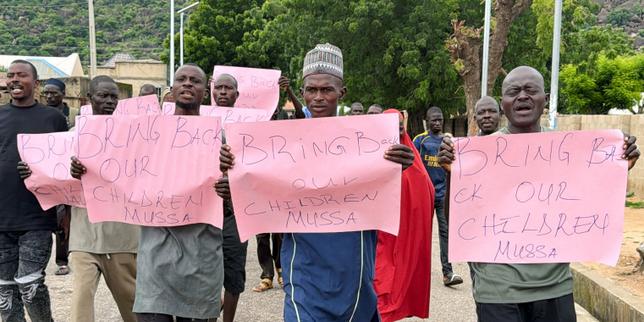
Statistics are bloodless things. When a report crosses a desk in Lagos or Paris stating that nearly five million euros in ransoms were paid across a single grueling twelve-month period, the mind tends to glaze over. It is a large sum. It is a collection of digits on a spreadsheet. But numbers do not capture the trembling hands of a mother selling her last corrugated metal roof to gather three hundred thousand naira for men whose faces she never saw. Numbers do not measure the hollow ache inside a father who returns from the bush empty-handed, knowing his teenage daughter has spent another night sleeping on the cold dirt of a forest camp.
To understand the machinery of abduction that has gripped parts of Nigeria, one must look past the dry aggregates and step into the suffocating reality of the victims.
Imagine, if you will—and here I speak not of a generalized abstraction, but of a composite portrait drawn from dozens of documented accounts—a small-scale farmer named Ibrahim. Ibrahim is a man who measures his wealth in yams and the laughter of his twin boys. He is neither politician nor oil executive. He is simply a man trying to outpace the stubborn soil of his ancestors.
One Tuesday, the silence of his compound shatters. Heavy boots. Shouts in the dark. Cold metal pressed against the back of a skull.
Within minutes, Ibrahim’s world shrinks to the circumference of a blindfold. He is marched into the dense, unforgiving canopy of the northern forests, a labyrinth where sunlight barely reaches the floor and armed gangs operate with impunity. There, he joins a ghost community of captives. Bankers, traders, toddlers, university students—all reduced to a single, terrifying denominator: currency.
Soon comes the phone call. It is a scratchy, hurried voice over a burner phone, demanding a sum that exceeds anything Ibrahim's family could earn in ten lifetimes.
This is where the macro-economic reality of modern banditry collides with the micro-tragedy of the human heart.
Over the course of that single year analyzed by security monitors and risk analysts, the numbers ballooned not because kidnapping became more sophisticated, but because it became institutionalized. It mutated into an underground economy complete with negotiators, couriers, and financial pipelines running through mobile money accounts and informal hawala networks. When nearly five million euros changes hands in ransom payments within twelve months, it proves something deeply unsettling. The system works for the predators.
Every successful payout acts as fuel for the next raid. The money buys more motorcycles, more AK-47s, more ammunition smuggled across porous borders. It transforms opportunistic criminality into a self-sustaining corporate enterprise operating in the bush.
Yet, reducing this crisis entirely to economics misses the deeper psychological erosion happening across communities. Trust is the first casualty. When neighbors begin to eye one another with suspicion—wondering who might be leaking movement patterns to the bandits for a cut of the payout—the social fabric frays beyond repair. Schools close indefinitely. Fertile fields lie fallow because walking out to harvest the yam crop is now a lottery with death.
Consider what happens next to those who actually return.
Release does not equal freedom. Ibrahim will eventually walk back home, emaciated, carrying the invisible scars of isolation and terror. But the family farm is gone, sold off to pay the ransom. The debt collectors are at the door. The community, financially bled dry, has nothing left to offer. The psychological trauma lingers like a permanent shadow, turning every snapping twig in the night into a potential return of the captors.
Governments issue stern warnings against paying ransoms. They talk of deterrence, of state monopoly on violence, of law enforcement strategies. And from an armchair miles away in a secure capital, the logic is unassailable. If you pay, you feed the beast.
But try explaining state policy to a mother whose son is tied to a tree in a rain-soaked clearing. Try lecturing a desperate spouse on macroeconomic stability while their loved one faces daily beatings. When institutional protection fails, human desperation takes the wheel. People will sell their dignity, their futures, and their land to bring their blood back home.
This is the agonizing paradox at the heart of the Nigerian kidnapping crisis. It is a trap of our own collective making, where every act of love—paying to save a life—inadvertently sharpens the blade that threatens the next.
Breaking this cycle requires more than tactical military sweeps through the forests. It demands an unyielding fortification of rural security, the restoration of economic alternatives for marginalized youth, and the dismantling of the financial conduits that allow dirty money to move invisibly through the banking system. It demands that the state becomes more present, more reliable, and more fiercely protective than the armed gangs roaming the periphery.
Until then, the forest remains vast. The burner phones keep ringing. And in the quiet hours before dawn, families continue the grim math of survival, wondering whose name will be called next in the dark.