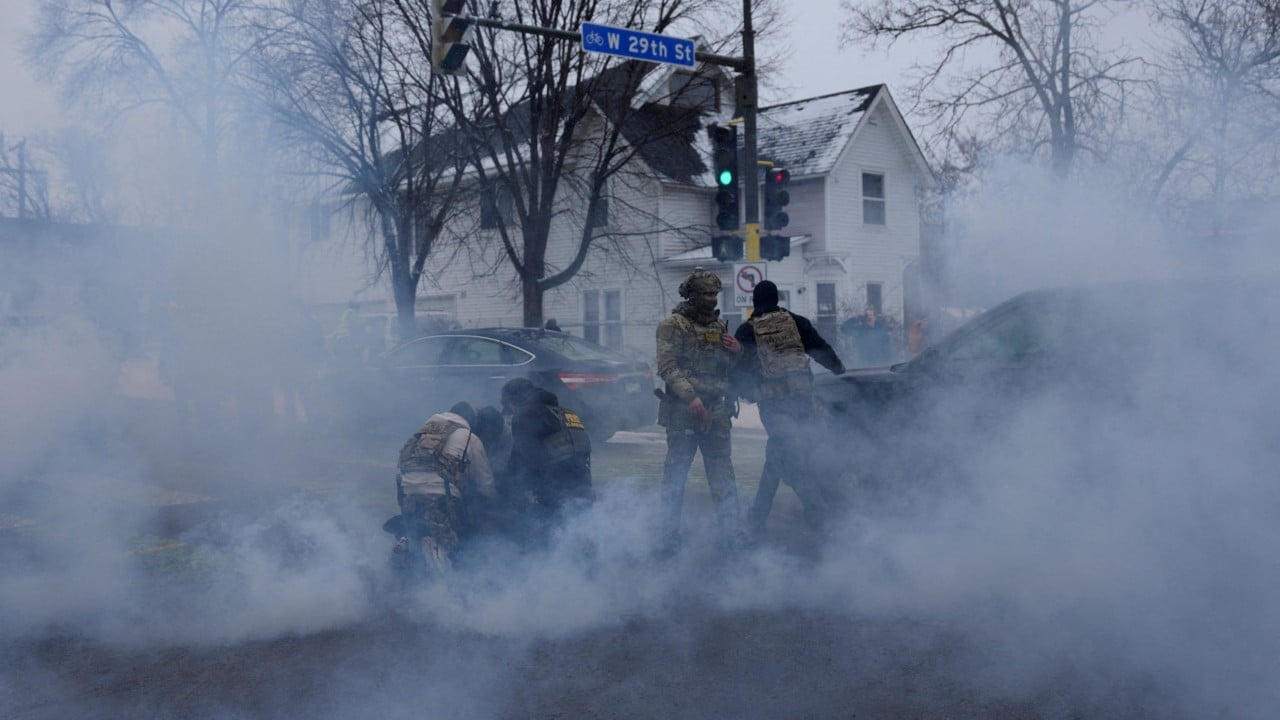
Every single week, media outlets shovel the exact same visual sludge onto your screen. They bundle a forest fire in Greece, a street protest in Delhi, and a political handoff in London into a neat little digital photo album. They call it a global snapshot. They call it keeping you informed.
I call it a cognitive sedative.
When you look at three completely unrelated catastrophes stacked next to each other in a grid, your brain does something dangerous. It flattens complexity. It tricks you into believing that a localized ecological disaster, a complex socio-economic protest, and a parliamentary reshuffle are all part of some synchronized narrative script. They are not. They are isolated friction points in a massive, messy system, and packaging them together does nothing except trigger your amygdala for clicks.
Let us dismantle the lazy consensus behind the weekly photo gallery.
The Illusion of Proximity
The foundational lie of the multi-topic news digest is that geography and timing equal relevance. Just because a wildfire, a youth demonstration, and a prime ministerial transition happen in the same seven-day window does not mean they belong in the same hemisphere of your brain.
When editors group these events, they force a false equivalence. A teenager marching in India over economic anxiety has zero causal relationship with a Downing Street carpet-sweeping exercise. Yet, by presenting them side-by-side, the media creates a synthetic connection.
Imagine a scenario where you walked into a hospital waiting room and an algorithm showed you pictures of a broken arm, a routine blood test, and an open-heart surgery all at once, treating them as equivalent symptoms of "today in health." You would call that medical malpractice. But when news outlets do it to geopolitics, we call it journalism.
Let us look at the individual pieces of this week's lazy curation and strip away the photo-op veneer.
Wildfires Are Not News Anymore And That Is The Problem
Every summer, Europe burns. And every summer, newsrooms act like it is a sudden plot twist.
The standard media framing focuses on the orange skies, the heroic firefighters, and the scorched olive groves. It is high-drama imagery designed to evoke shock. But shock is a terrible strategy for risk management.
When you treat predictable ecological collapse as a breaking news photography contest, you obscure the boring, unsexy structural failures beneath it. The crisis is not that a forest caught fire during a heatwave; physics makes forests catch fire during heatwaves. The crisis is decades of municipal underinvestment in controlled burns, obsolete zoning laws that encourage building in high-risk brushlands, and water management policies written in the previous century.
Stop looking at the flames. Start looking at local government budgets. That is where the actual fire starts.
Youth Protests Are Not A Monolith
India's streets erupt periodically because a demographic mountain of young people is crashing against a concrete wall of structural employment bottlenecks. British media loves to drop a striking photo of a smoke flare in Delhi or London, slap a broad caption about "youth unrest," and call it a day.
This is intellectually lazy.
A protest by tech-literate gig workers in an urban center has entirely different drivers than a rural agrarian demonstration or a student union strike over tuition caps. Lumping them together under a banner of "youth angst" erases the specific policy failures that caused each one.
When you simplify civil unrest into a mood board of angry young faces, you invite two equally useless reactions:
- Romanticizing the rebellion as a heroic cinematic moment.
- Dismissing the participants as unruly rioters needing crowd control.
Both reactions miss the mechanical reality. People do not march for fun on a Tuesday afternoon. They march because institutional feedback loops are broken. If governments built functional channels for grievance resolution, photojournalists would have fewer dramatic backdrops for their Sunday roundups.
The Musical Chairs Of Downing Street
Then we have the political theatre of the UK changing its prime minister.
The media treats a change in Westminster leadership like a royal coronation or a season finale of a prestige television drama. New person walks through the black door, waves at the cameras, appoints a cabinet of loyalists, and the commentariat spends seventy-two hours dissecting tie choices and body language.
It is empty calories.
The systemic challenges facing the British state—stagnant productivity, crumbling public infrastructure, an over-leveraged housing market, and an aging demographic curve—do not care who sits in the prime minister's chair. Cabinets change; the macroeconomic gravity remains identical.
Focusing on the face at the podium is a brilliant deflection technique. It lets political parties pretend that a fresh coat of paint solves a rotting foundation.
Why The Format Persists
Content platforms love photo roundups because they exploit human evolutionary psychology.
We are visual animals. For ninety-nine percent of human history, a sudden change in our visual field meant a predator or a new food source. Our ancestors survived by scanning the horizon for anomalies.
Modern media companies weaponize this survival instinct. They take complex, systemic policy failures and turn them into high-contrast images of smoke, crowds, and podiums. They know your nervous system cannot ignore a high-res shot of a burning hillside next to a tear-gassed crowd.
It is emotional hijacking disguised as an update on world affairs.
How To Consume Information Without Losing Your Mind
If you want to understand how the world actually works, you have to break the habit of grazing on visual summaries. Here is the operational playbook for cutting through the noise:
- Ban visual-first summaries from your morning routine. If an article leads with a photo essay of unrelated global disasters, close the tab. You are buying emotional manipulation, not data.
- Isolate the variables. When a crisis happens, track it vertically, not horizontally. Do not look at what else happened that week in a different country. Look at what happened in that specific municipality over the last ten years.
- Follow the boring metrics. Ignore the podium speeches and the protest banners. Read the fiscal audit reports, the zoning board minutes, and the labor bureau statistics. They lack cinematic lighting, but they never lie.
The world is not a weekly magazine spread. Stop letting algorithms curate your worldview through a lens of manufactured chaos.