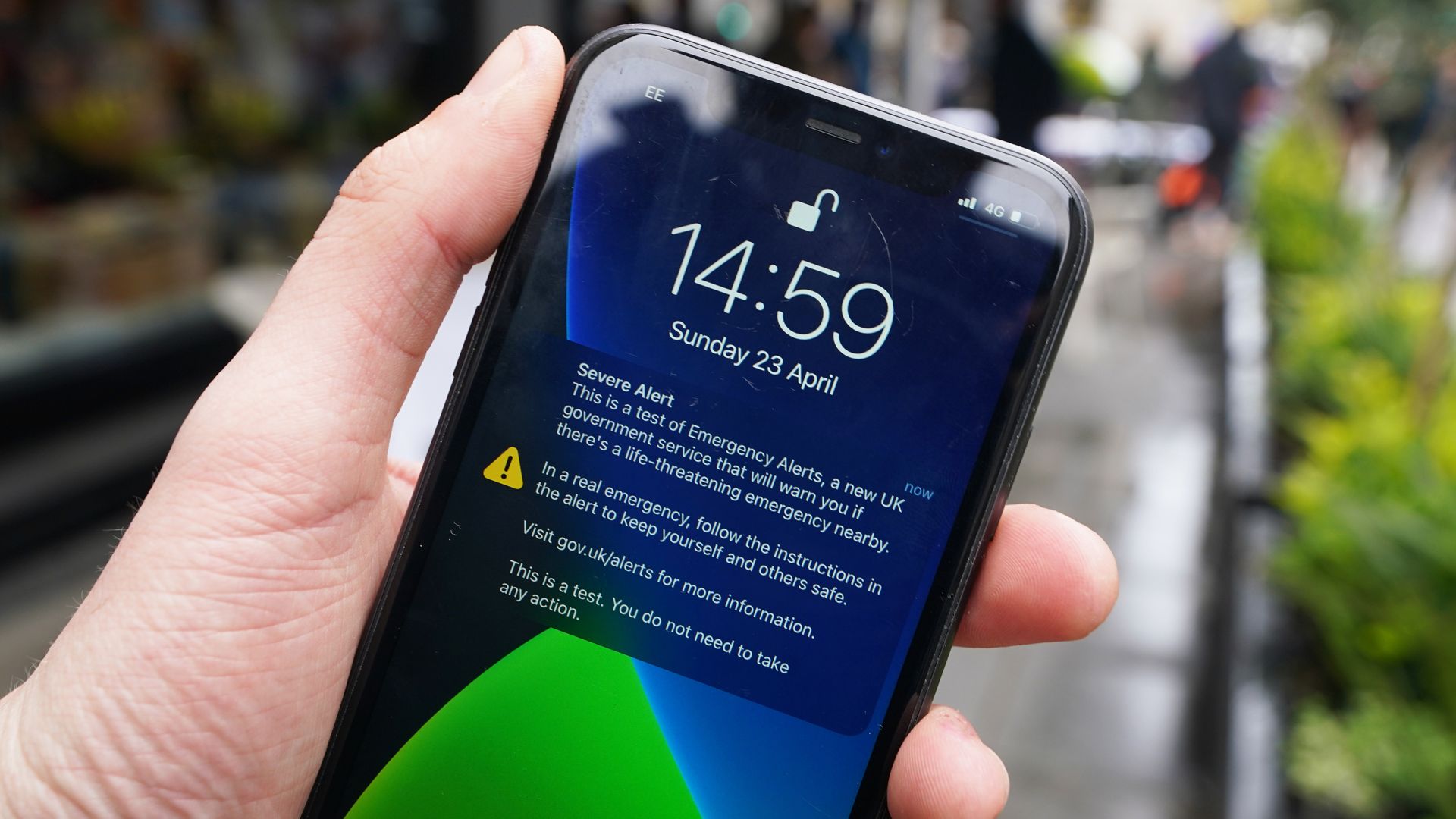
You probably remember exactly where you were when your phone screamed at you on a Sunday afternoon in April 2023. That nationwide test of the UK emergency alerts system was hard to miss. It was loud, it was jarring, and it was meant to be the start of a new era of public safety. But since that day, the silence has been deafening.
Despite record-breaking heatwaves, flash flooding that turned London streets into rivers, and several major security incidents, the government hasn't pulled the trigger on a real-life alert. It makes you wonder if the system is actually broken or if the people in charge are just too scared to use it. The truth is somewhere in the middle, buried under layers of bureaucracy and a desperate fear of "alert fatigue."
We've seen moments where the UK emergency alerts could have saved lives or at least cleared the roads for first responders. Instead, the Cabinet Office kept the system under lock and key. This isn't just about technical glitches. It's about a fundamental disagreement on what constitutes a "life-threatening" event in a country that’s increasingly prone to extreme weather.
Close Calls That Didn't Make The Cut
The government has internal criteria for what triggers a siren on your smartphone. It’s supposed to be about an immediate threat to life. Think 1950s Cold War vibes, but for the 21st century. However, several incidents over the last two years came incredibly close to hitting the "send" button before someone at the top flinched.
Take the 2024 flooding events across the Midlands. We saw homes submerged and cars swept away. Local authorities were screaming for better communication. In the Cabinet Office, discussions were held about using the cell-broadcast system to warn specific postcodes. They didn't do it. They relied on local news and social media instead. If you weren't checking Twitter at 3:00 AM while the water rose, you were out of luck.
Then there’s the issue of extreme heat. When the UK hit 40°C for the first time, the mortality rate among the elderly spiked. This was a slow-motion disaster. Public health officials toyed with the idea of a nationwide alert to remind people to stay hydrated and check on neighbors. It was shot down. The reasoning? People already knew it was hot. That’s a weak excuse when you consider that a formal government alert carries a weight that a BBC weather forecast simply doesn't.
The Fear of Crying Wolf
The biggest hurdle for the UK emergency alerts system isn't the tech. It’s the psychology of the British public. The government is terrified that if they send an alert for a "minor" flood and nothing happens, you’ll go into your settings and toggle the "Extreme Alerts" switch to off.
Once you opt out, they’ve lost you.
This creates a paradox. To keep the system effective, they rarely use it. But by rarely using it, the public forgets it exists, or worse, they don't know how to react when the phone actually starts wailing. We saw this in the US with Amber Alerts. In some states, they were sent so frequently for non-proximate issues that people started ignoring them entirely. The UK is trying to avoid that trap, but they might be overcorrecting into total irrelevance.
Why Cell Broadcast Is Different From Texting
It’s worth understanding how this actually works so you don't fall for the "government is tracking me" conspiracies. The UK emergency alerts don't use your phone number. It’s a cell broadcast.
The government sends a signal to every mast in a specific area. If your phone is connected to that mast, it picks up the signal and makes the noise. They don't know who you are, where you're going, or even how many people received the message. It's a one-way shout. This is why it’s so much better than the old SMS-based systems that used to clog up the network and take hours to deliver.
Lessons From The 2023 National Test Failure
The test on April 23, 2023, wasn't the smooth success the government claimed. Thousands of people on the Three network received the alert late or not at all. Others got the alert twice. While the Cabinet Office spun it as a "successful learning exercise," it revealed some deep-seated issues with how the UK's mobile infrastructure talks to the central government's emergency server.
If a real terror attack happened or a dam burst, a ten-minute delay is the difference between getting to high ground and being caught in the crush. The government has spent the last year quiet-fixing these back-end issues with network providers. They’re terrified of another public failure, which is likely why we haven't seen a regional rollout for smaller incidents yet.
What Other Countries Are Doing Better
Look at Japan or South Korea. In those countries, emergency alerts are part of daily life. If there's an earthquake or a North Korean missile launch, the phones go off instantly. There's no hand-wringing in a committee room about whether the public will be annoyed.
In the UK, we treat the alert like a nuclear "red button." It’s seen as a tool of last resort rather than a proactive safety measure. This conservative approach means we're leaving one of our most powerful communication tools on the shelf while people are still getting caught off guard by predictable weather events.
When You Should Actually Expect An Alert
Don't expect your phone to buzz for a bit of snow or a standard thunderstorm. The threshold is much higher. Based on current policy, there are only a few scenarios where the UK emergency alerts will actually be triggered in 2026 and beyond:
- Major Flooding: We’re talking about catastrophic "danger to life" warnings where defenses are expected to fail.
- Terrorist Incidents: If there is an active shooter or a situation where the public needs to "Run, Hide, Tell" in a specific city center.
- Industrial Accidents: A chemical leak or a fire at a nuclear site where residents need to stay indoors and seal windows.
- Civil Defense: High-level national security threats that require immediate public action.
Everything else? You're on your own. You’ll still be relying on the Environment Agency's website or the Met Office app.
Taking Your Own Safety Seriously
You shouldn't wait for the government to decide your life is in danger. If you're relying solely on the UK emergency alerts system, your plan is flawed. The bureaucracy is too slow and the "risk appetite" among officials is too low.
Start by checking your phone settings right now. Go to "Notifications" and scroll to the bottom. Make sure "Emergency Alerts" and "Extreme Alerts" are turned on. Some people disabled them after the test because the sound was annoying. That's a mistake. You don't want to be the one person in the crowd whose phone is silent when everyone else is running for cover.
Next, download the specialized apps. The Met Office and the Environment Agency have much lower thresholds for sending notifications than the national alert system. They won't make your phone scream, but they will give you the 15-minute head start that the Cabinet Office is too timid to provide.
The system is there, and it works, but it's clear the government is only going to use it for the absolute worst-case scenarios. Until they get braver with the technology, you'll need to keep your eyes open and your own alerts active.