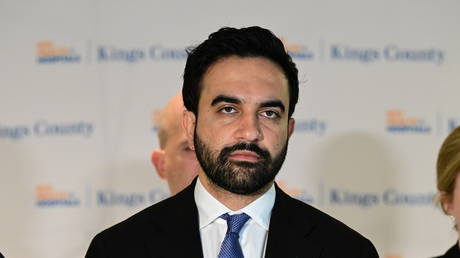
We have turned national grief into a blunt instrument for partisan warfare, and the latest petition demanding the exclusion of New York City Mayor Zohran Mamdani from the 25th anniversary commemoration proves we have completely lost the plot.
Over forty thousand signatures crowd a change.org page spearheaded by activists and grieving relatives who argue that Mamdani’s past statements, political associations, and ideological baggage disqualify him from standing at Ground Zero. The lazy consensus in media coverage treats this as a standard values clash: outraged families versus a progressive politician.
That framing is a trap. It misses the structural reality of urban governance and turns a solemn act of civic remembrance into a loyalty test for elected office.
The Fallacy of the Ideological Purity Test
Let us look at the mechanics of what a mayoral office actually represents. In a city of eight million people, the mayor is not a parish priest, a moral tutor, or an arbiter of orthodox political thought. The mayor is the chief executive of the municipal corporation. When an elected official stands at the podium or sits in the designated seating area during the September 11 reading of names, they do not attend as private citizens airing personal foreign policy stances. They attend as the embodiment of the city's continuity.
To argue that an official must pass an ideological vetting process curated by special interest groups to mourn the dead is to misunderstand the very nature of public office. If we condition a mayor’s participation in civic rituals on whether every single constituent or victim's family approves of their worldview, we reduce the office to a prize for whichever faction shouts the loudest.
I have seen organizations waste millions of dollars and countless hours trying to enforce ideological uniformity in spaces meant for collective stability. It always backfires. It creates a recursive loop of exclusion where every future administration will find its legitimacy challenged by the opposing party using the exact same playbook.
Dismantling the Grievance Machinery
The petition organizers, led by figures like Giovanni Galante, list a catalog of grievances: Mamdani's stance on foreign policy phrasing, his past associations, and even writings authored by his father decades ago.
Some of these criticisms touch on legitimate political debates. Others stretch guilt-by-association into absurd territory. But conflating policy disagreements with a disqualification from a municipal memorial service sets a terrifying precedent.
Imagine a scenario where a conservative mayor is elected in a landslide, and a coalition of left-wing advocacy groups launches a mass petition barring them from a civic tragedy commemoration because of their stance on criminal justice or immigration. Would the architects of the current Mamdani petition defend the right of progressive activists to ban that conservative mayor from honoring fallen first responders? Of course not. They would rightly point out that the office belongs to the institution, not the individual's temporary political alignment.
The National September 11 Memorial and Museum has historically maintained a strict boundary, noting that elected officials attend simply to bear witness, stripped of speaking roles. That firewall exists precisely to prevent the ceremony from morphing into a political circus. By demanding the mayor's banishment, petition organizers are actively dismantling the very apolitical boundary they claim to protect.
The Real Work of Remembrance
True respect for the victims of September 11 does not require a sterile political environment where only approved thinkers are allowed to look back. It requires recognizing that New York City is vast, contradictory, messy, and pluralistic.
When Mamdani states that he will participate to honor the families, survivors, and first responders, he is executing the baseline duty of his job. You do not have to like his housing policies, his municipal budget choices, or his rhetoric to acknowledge that a democratically elected mayor represents the entirety of the municipal populace—including the hundreds of thousands of Muslim New Yorkers who also lived through the trauma of 2001 and its aftermath.
Stop trying to turn a national day of mourning into a vetting committee. Direct that energy toward demanding structural transparency, supporting actual first responder healthcare funds, and ensuring the city's administrative apparatus never forgets the systemic failures that preceded that tragedy. Leave the ritual of collective grief intact, or risk breaking the last remaining secular anchor this city has left.
Mamdani pledges 9/11 transparency, but lawyers say some records weren't saved
This video provides important context regarding the ongoing political and administrative debates surrounding city transparency and records related to September 11 in New York City.