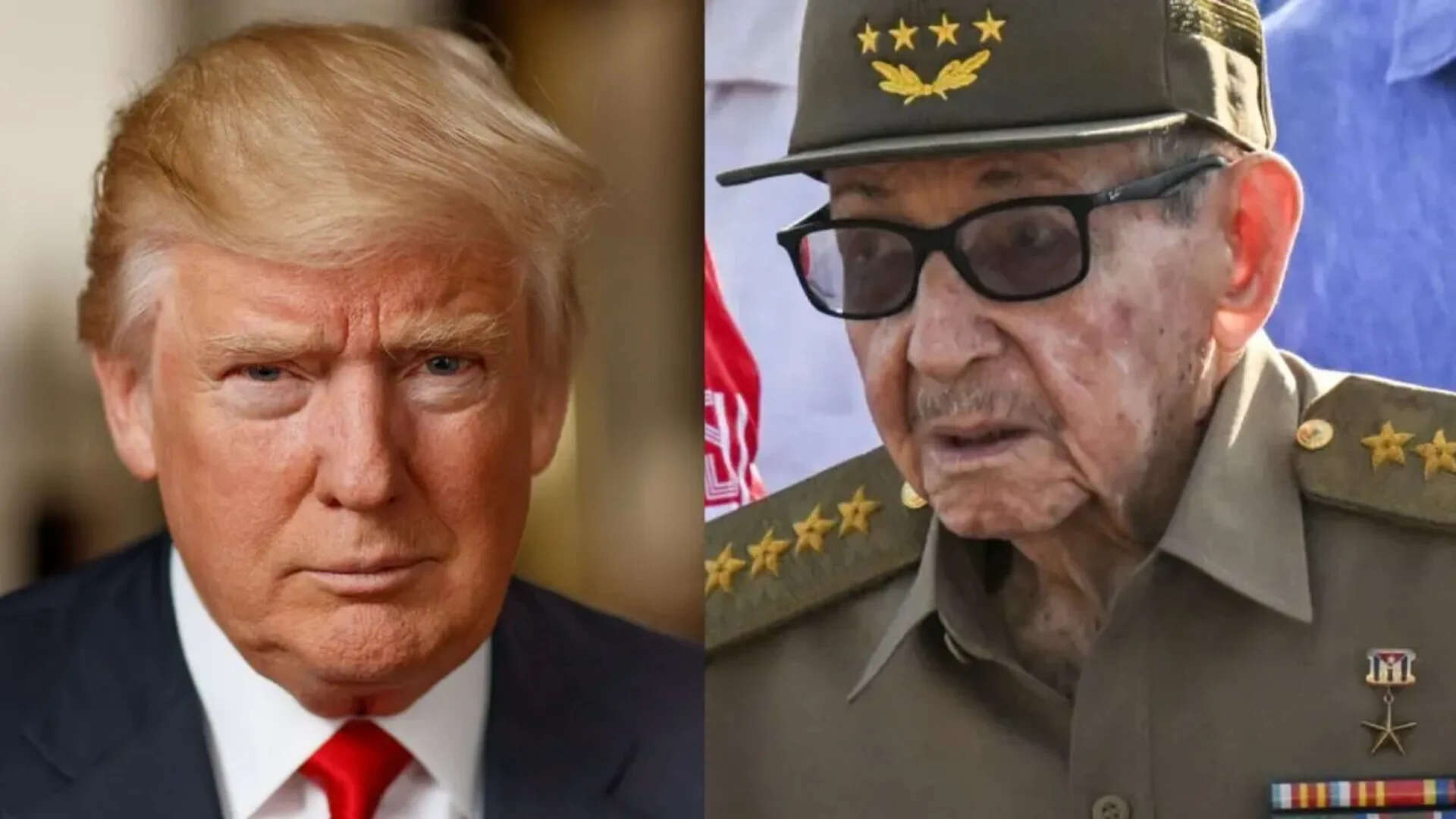
The United States Department of Justice has unsealed a federal indictment charging 94-year-old former Cuban President Raúl Castro with murder and conspiracy to kill US nationals stemming from the 1996 shootdown of two civilian aircraft. While framed as a historic pursuit of justice for four slain volunteer pilots, the sudden arrival of these charges after three decades has less to do with the unresolved trauma of the Cold War and everything to do with a meticulously coordinated, high-stakes campaign to dismantle the Cuban regime.
By targeting the last living icon of the 1959 revolution, Washington is establishing a precise legal mechanism that directly echoes the geopolitical playbook used to overthrow Venezuela's Nicolás Maduro just months ago.
The Leveraged Legacy of the Brothers to the Rescue
On February 24, 1996, Russian-made MiG-29 fighter jets operating under the command of Cuba's Ministry of Revolutionary Armed Forces intercepted three unarmed Cessna 337 Skymasters over the Florida Straits. The planes belonged to Brothers to the Rescue, a Miami-based exile organization that flew humanitarian search-and-rescue missions to locate rafters fleeing the island.
Two of the aircraft were obliterated by air-to-air missiles over international waters. Four men—Carlos Costa, Armando Alejandre Jr., Mario de la Peña, and Pablo Morales—were killed instantly.
For nearly thirty years, the case remained an open, bleeding wound in South Florida politics. The Clinton administration initially balked at indicting Raúl Castro, who was defense minister at the time, fearing the geopolitical fallout of targeting a sitting foreign leader. Instead, the US codified economic sanctions via the Helms-Burton Act, pushing the direct criminal accountability of the Cuban high command into a decades-long deep freeze.
The 20-page indictment unsealed in Miami dismantles that historical reluctance. Castro faces one count of conspiracy to kill US nationals, four counts of murder, and two counts of destroying an aircraft. Joining him on the sheet are five co-defendants, including the fighter pilots who executed the strike.
Acting Attorney General Todd Blanche explicitly signaled that Washington views this as an actionable mandate rather than a symbolic gesture. He noted that an arrest warrant has been issued and that the United States expects Castro to face the charges either by his own will "or by another way."
The Script From Caracas
To understand the sudden legal velocity behind this indictment, one must look backward to January, when US special forces launched a raid into Caracas, seizing Venezuelan President Nicolás Maduro. That operation did not materialize out of thin air. It relied entirely on a pre-existing US federal indictment that stripped Maduro of his sovereign immunity under the color of American law, transforming a foreign head of state into a fugitive criminal target.
The blueprint is being deployed against Havana with unmistakable symmetry.
Maduro Indictment (Narcotics) -> January Special Forces Operation -> Extraction
Castro Indictment (Murder)    -> Energy Blockade / Pressure Campaign -> ?
By charging Castro with the murder of American citizens in international airspace, the Justice Department has built a direct bridge to bypass traditional diplomatic immunity. This is not a policy shift aimed at containment or diplomatic normalization. It is an explicit, aggressive pivot toward regime change, using federal courthouses as the staging ground.
Cuba's current president, Miguel Díaz-Canel, immediately identified the strategic architecture behind the charges, denouncing the indictment as a fabricated political maneuver designed to lay the groundwork for military aggression.
A Regime on the Brink of Collapse
The legal assault arrives at a moment of acute vulnerability for the island nation. Cuba is currently grappling with its most catastrophic economic crisis since the collapse of the Soviet Union. The domestic energy grid is in a state of near-perpetual collapse, exacerbated by an aggressive US blockade on oil and energy imports that has effectively choked off the fuel shipments that previously kept the country functioning.
Food shortages are rampant, inflation has rendered the local currency virtually worthless, and rolling blackouts regularly plunge entire provinces into darkness. The Trump administration has spent months tightening this vise, applying secondary sanctions on foreign shipping companies and targeting Gaesa, the opaque, military-run conglomerate that controls the vast majority of Cuba’s lucrative tourism and retail sectors.
Just last week, CIA Director John Ratcliffe made an unannounced visit to Havana, a move followed by a stark warning from agency officials that Washington was prepared to enforce definitive "red lines."
Coupled with a coordinated leak of intelligence reports detailing Cuba's recent acquisition of hundreds of advanced foreign drones, the narrative inside Washington has shifted from treating Cuba as an impoverished communist relic to labeling it an active, asymmetric national security threat just 90 miles from the Florida coast.
The Geopolitical Endgame
There are two competing interpretations of where this road ends. Veteran Cuba analysts, such as University of Miami professor Michael Bustamante, note that the indictment could serve as high-octane political red meat for the powerful exile voting bloc in South Florida ahead of the November midterm elections, all while the administration quietly keeps a back channel open for an ultimate exit deal.
The alternative, darker reality is that the administration has no intention of negotiating. By systematically dismantling Cuba's economy, imposing an energy stranglehold, and filing capital murder charges against the regime's ultimate puppet master, the United States has removed all off-ramps.
Raúl Castro will turn 95 next month. He remains the ideological anchor of the Cuban state, wielding immense power from behind the scenes through his handpicked successor and his grandson, who leads his security detail. He will never willingly step into a federal courtroom in Miami to face a life sentence or the death penalty.
By demanding his surrender, Washington has set an impossible condition. The administration has created a legal crisis that cannot be resolved through diplomacy, leaving open the distinct and volatile probability that the final chapter of the 1959 Cuban revolution will be written by American federal marshals.