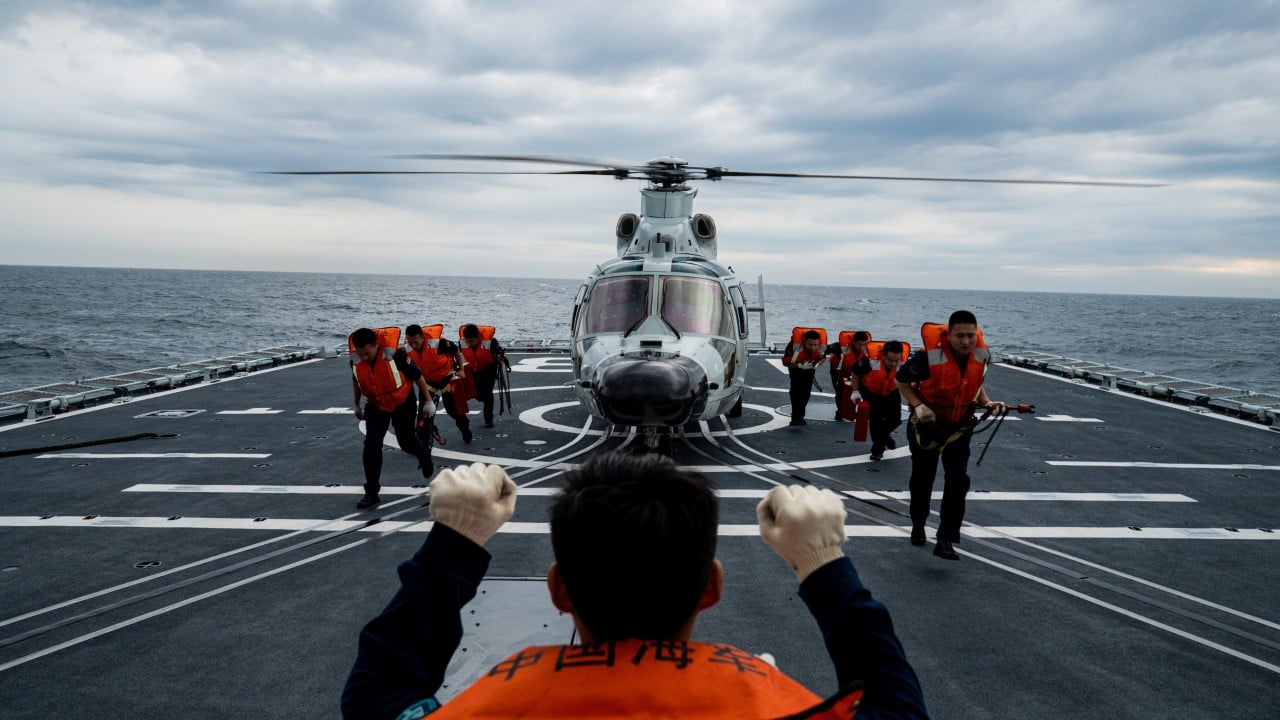
When a combined armada of Chinese and Russian warships loops entirely around the Japanese archipelago, Tokyo takes notice. So should the rest of the world.
This isn't just standard posturing on the high seas. It's a calculated, highly coordinated display of naval muscle designed to challenge the status quo in East Asia. Recent joint patrols, including live-firing drills inside Japan's exclusive economic zone near Okinotori, show that Beijing and Moscow are done playing nice with Western-aligned security architectures.
If you want to understand why these maneuvers matter right now, you have to look past the diplomatic noise.
Shattering the Island Chain Myth
For decades, military planners talked about the "first island chain" as a natural barrier. The theory went that nations like China could be penned in by a string of islands stretching from Japan down through Taiwan and the Philippines.
Beijing and Moscow are systematically shredding that playbook.
By executing a sweeping clockwise circumnavigation of Japan—utilizing strategic waterways like the Soya Strait and Miyako Strait—the combined task group proved they can project power seamlessly. They want to show that naval blockades work both ways.
Japan's Ministry of Defense recorded Type 055 and Type 052D guided-missile destroyers alongside Russian frigates operating together for days. These aren't accidental overlaps. They represent deep operational integration.
The Geopolitical Pressure Point
Timing is everything in geopolitics. These patrols don't happen in a vacuum.
Relations between Tokyo and Beijing have remained tense following sharp exchanges over Taiwan. Under Prime Minister Sanae Takaichi, Japan has accelerated its pivot toward a more proactive defense stance, shaking off decades of strict pacifism.
China and Russia are pushing back hard against that shift. Analysts note that Beijing is using joint military weight to signal displeasure with Tokyo's foreign policy. Moscow, meanwhile, gets to demonstrate that despite heavy economic burdens and the ongoing war in Ukraine, its Pacific Fleet remains an active, aggressive global player.
When nuclear-capable bombers and missile destroyers start syncing up their schedules, it sends a clear message. The partnership between Beijing and Moscow isn't just an economic convenience. It's an evolving military axis.
How Tokyo Is Responding
Japan isn't sitting on its hands. Defense officials have ramped up surveillance aircraft scrambles to record every single movement of the joint flotilla.
Tokyo's latest Defense White Paper labels China an unprecedented strategic challenge and highlights growing safety risks tied to the trilateral friction involving North Korea. When foreign warships execute live-fire drills near your exclusive economic zone, normal maritime diplomacy breaks down.
Expect Japan to accelerate its military modernization programs, deepen cooperation with regional partners, and push for even tighter security integration with the United States.
The waters around the Japanese archipelago are getting crowded. And the era of quiet seas is officially over.